Showing posts with label CEFR. Show all posts

Tuesday, 18 March 2025

Turning Plots into Powerful Stories: ChatGPT in Action


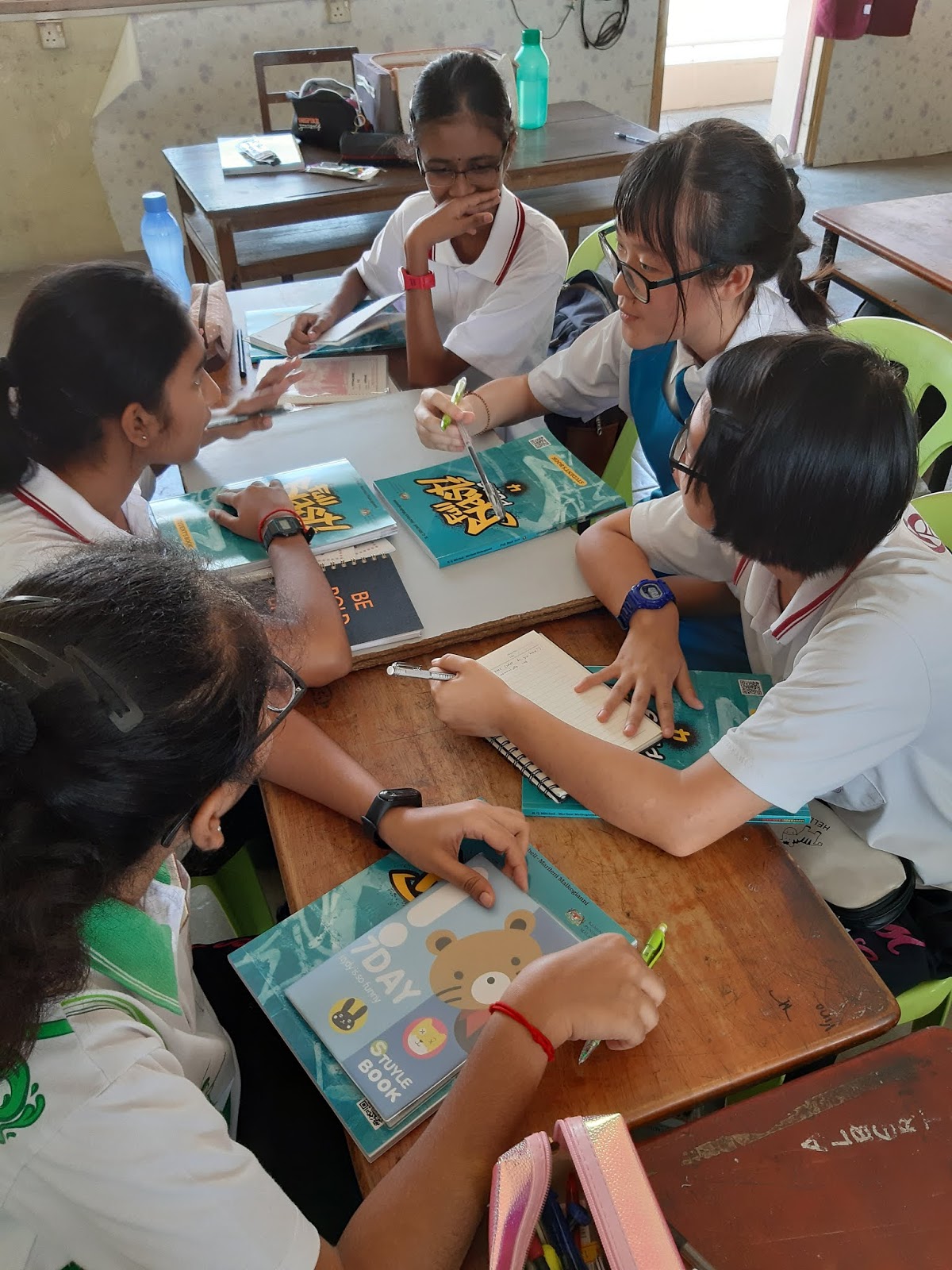
I must admit, I have been slightly behind schedule with my writing lessons, but I have managed to squeeze in three sessions so far. This week, however, I decided to take a different approach and integrate AI into my Form 5 writing lesson. The task was based on Unit 2 from English Download, where students had to write a short story, incorporating both a map and a surprise message. Since I had secured eight smartphones for classroom use, I divided the students into eight groups, assigning one device per group.


We kicked off the session with a brainstorming activity. Each group was tasked with drafting a suitable plot for their story within 15 minutes. After their initial discussions, groups presented their plots to me for feedback.

The next step was where ChatGPT came into play. Students were given 30 minutes to utilise the AI tool to enhance their ideas. Their goal was to explore creative ways to elevate their stories to a B2 mid level, focusing on key storytelling elements. These included structuring their narrative effectively, enriching vocabulary, using direct speech, and engaging the five senses to bring scenes to life.

For instance, if a group initially wrote, 

"He walked through the door inside the house,

they were encouraged to elevate this sentence by adding vivid descriptions and sensory details. Instead of the basic version, they could write something like, 

“He pushed open the creaking, weathered oak door, its rusty hinges groaning in protest, and stepped into the dimly lit hallway where the scent of damp wood and old paper filled the air.”

Using ChatGPT, students researched how to describe the door’s appearance – was it cracked, ornate, heavy, or splintered? – and how to set the atmosphere inside the house. Was it cold and silent, warm and inviting, or eerie with flickering shadows? They were also guided to weave in sensory details, such as the musty smell lingering in the air or the chill that brushed against his skin as he entered.


I reminded them to stick to British spellings and to be mindful of their usage since the free version on their DELIMA accounts limited them to fifteen attempts. To support them, I also shared sample prompts and guided them on how to structure queries to get better responses from ChatGPT.

Once the AI research was done, students translated their findings into mind maps on A3 paper, which they presented briefly (around two minutes per group). I listened to their ideas, provided corrections where necessary, and then set them off on their final task – writing the full story. They were given forty minutes to complete and submit their essays.


What I can reflect from this session was how ChatGPT, when used in a controlled and guided manner, streamlined the lesson planning process for me. I did not need to spend as much time preparing vocabulary lists, grammar notes, or brainstorming examples as I usually do.

More importantly, this approach fostered learner autonomy. Students actively explored, experimented, and learned from their research using AI. It encouraged them to think critically about their writing and to collaborate effectively within their groups. The integration of ChatGPT also brought an element of excitement and novelty to the classroom, which boosted their engagement.

Combining AI tools with traditional classroom strategies proved to be a meaningful step towards promoting research-based learning and enhancing students' writing skills.

Tuesday, 5 April 2022

Speaking Task : Unit 1 Form 4


One of the ways to encourage your pupils to speak in English lesson is by developing lessons that would engage them. With the right activities, speaking lessons can be both fun and exciting for pupils.. The following is a speaking activity that I carried out recently. It turned out well as I could see the productive skill (Speaking) were being built among students when they attempted to speak throughout the lesson. This task is based on the Full Blast English language textbook page 12.

Preparation 

The preparation for this lesson is very simple. All you need to do is prepare cards with the words learnt in the vocabulary section and also the words and phrases given to describe the activities in the pictures ( page 12). I had eight sets with 36 cards in each set.  The number of sets you need depends on the number of students in your class. I have 32 students in my form four class and I wanted to put them in groups of four, so I needed eight sets. I printed them in different colours so that it would be easier for me to sort them out if the get mixed up. 


Please click here if you want a pdf copy of the cards. Please bear in mind that we don't teach the same pupils so you may need to use simpler words if you are teaching the low proficiency group. 


Lesson Introduction

Teacher begins the lesson by asking pupils to talk to their shoulder partner about an activity they did the most during the MCO.  Then, pupils are then directed to the four activities shown in the pictures (page 12) . Pupils shout out loud the names of the activities and teacher writes them down on the whiteboard. Pupils are then directed to the vocabulary section (page 12) to just look and refresh on the vocabulary learnt previously. They are also asked to look at the list of words given in the box for speaking activity. Teacher explains the unfamiliar words with examples. After the explanation, pupils are then directed to the next activity. 

Activity 1


 The 'speaking cards' are placed in the middle as shown in the picture above. Before we start the activity, it is better to ask pupils to label themselves as student A, B, C and D.  In this activity, pupils are to pick the card from the middle of the table and use the words in the card to describe one of the four activities (video gaming, bungee jumping, painting and American football). Pupils are free to speak on any of the four activities. They are to use simple present tense or present continuous tense only. Once they have spoken, they should not return the card but keep it with them. Pupils take turns to speak until all the cards are taken. At the end of the activity each student should have 4 to 5 cards in their possession (depends on number of cards you prepared). 

Activity 2  


With the cards that they have with them, pupils are now to start interacting with one another. For example, Student A would start using her speaking card containing the word 'Dangerous' by saying 

                "Bungee Jumping is a dangerous activity, do you agree with me student B? 

Student B should respond by using any of the words she has with her. For example, let's say she uses the word 'thrilling' and she might say ;

                 " I agree with you to a certain extend but I feel that it is both thrilling and exciting. I would  
                    love to give it a try one day. What is your opinion on this Student C? 

Student C might say 
                 
                  " Bungee jumping is too risky, I rather spend my leisure time painting the pictures of nature.                       It is more relaxing.  Do you share the same opinion with me,  Student D?

So, the activity continues until all the cards are used up. Pupils are to place the cards to the middle of the table once they have used them. Pupils should also be reminded that they must use one card at a time. If they are unable to respond to their friends, they would miss a turn and the next pupil can answer the question using any of her speaking cards. In this task, students listen to their peers' statements or questions and respond appropriately. 

If have tried this activity and I could see that students were able to use all the cards successfully. Students may agree and disagree, ask questions and respond to a question using the speaking cards they have relating to any one of the four activities given for their speaking task. 

After completing the second task, students are then directed to the third activity. 

Activity 3


Teacher picks one student from each group to redistribute the speaking cards  to all the group members. This activity starts with student D.  Student D, places one of the cards in the middle of the table and using the word in the card, she talks about one of the four activities that they have been discussing. When student D is done sharing opinion/feeling/fact/question any other group members can respond immediately by placing another card in the middle. The response could be agreeing and disagreeing or simply comparing with another free time activity ( from the four). Pupils continue to respond to one another as quickly as they can. The one who finishes all the cards first will be the winner. This task requires pupils to listen carefully, think  and respond immediately to the statements/questions offered. 

Please take note that, pupils can only respond using one card, and they need to wait for another person to speak before they could speak again. And if there is anyone in the group who is unable to use  all her cards at the end of the activity, she should continue speaking while the rest of the members observe and help her. This activity can also make the class a little noisier as students race with one another to speak. 


Activity 4  

Students speak to their shoulder partners by referring to the questions given in the textbook (page 12). 


Closure 
Students write on the exit cards on what went well in their learning today. 


Teacher's role throughout the lesson 

The teacher observes the task. Walk from group to group and offer help where needed while assessing the students. Also observe students' use of simple present and present continuous tense. The should be using these two tenses and they have learnt them in lesson two previously. This is a place for them to practice the tenses in communication with their peers. Teacher also corrects students where appropriate but should refrain from doing overt correction. 

That is all  and Happy Teaching! 


Thursday, 3 June 2021

How to use FLIPGRID for Speaking Lessons?


What is Flipgrid? 

Flipgrid is a website that allows teachers to create and  facilitate video discussions. Teachers can create  groups for each classroom and in each group teachers can post questions or topics of discussions. Students can respond to the questions and topics by responding through video responses that appear in a display. The videos can be shared with classes, small groups, or any collection of users interested in a common strand of questions. However, in order to protect my students' privacy I have made the setting private and the video responses sent by my students are only available for viewing and commenting by peers from their own classes. 

What do I use Flipgrid for? 

I find Flipgrid to be a student - friendly application and it makes my speaking lesson more interesting and interactive as I could see my students' responses via video messages in Flipgrid. This helps me to assess their speaking skills especially during the pandemic where teaching and learning is conducted via online and conducting speaking lessons online is very challenging.  Besides, making all 24 students in a class to speak during an online lesson is an invitation for disaster. Therefore, I have started using Flipgrid to facilitate learning during my speaking lessons. Flipgrid allows me as a teacher to take time to watch and listen to my students' spoken responses and also provides opportunity for them to practice their speaking skills from time to time.  (from one unit to another)

Not only has Flipgrid made it easier for me to carry out online speaking lessons with ease, it also has a large space for storage (this storage is free if you use your MOE account to register) that I could keep all my students' video responses as evidence for their learning (PBD filing purposes). Flipgrid makes it so much easier for me to organise students' tasks and keep their responses without endangering my devices.  

Records in my Flipgrid 'Teacher Account'

Another good thing about Flipgrid is that it is linked to our MOE _ DELIMA account, so teachers can actually 'import' students' name lists and monitor their video submissions via Delima account. I watch my students responses on Flipgrid and keep their scores in Delima. I also leave written or sometimes video comments at the end of their videos to help them to look into  mistakes and contents. 

The video below shows some examples of students' video responses : 


Please be reminded that students can respond via the Flipgrid with any camera - enabled device. Teachers can also set the duration of responses for the topics given. Responses can be as short as 15 seconds and the longest response can be five minutes. Another interesting feature in Flipgrid is that teachers can also enable peers to respond to their friends' videos via video replies. I have enabled this feature for students within the same classroom. 

If you are interested in using Flipgrid in your lessons, click and watch the videos below and after that you will be all set to get started! 

a) Introduction to Flipgrid - Click Here 

b) How to Teach with Flipgrid  Video 1 - Click Here 

c) How to Teach with FLipgrid Video 2 - Click Here 


Saturday, 11 July 2020

Understanding 'A Poison Tree' through Poetry Bingo!


In my previous post, I shared a poetry lesson I had with my students after the school reopened. As a follow up lesson to check how much they had understood the poem, I decided to do a poetry bingo with them. 

Zoe - Trying to get her first 'BINGO!'


The lesson was intended to check how much they had understood (formative assessment)  the poem from the previous lesson. This was done to ensure students' understanding of the poem 'A Poison Tree' and planning the 'What's next?".So, I decided to try out 'POETRY BINGO' with them. 

The reason I chose Poetry Bingo because I wanted to them to enjoy learning poetry. At the same time while maintaining social distancing in the class, they could do something fun.  

Ever since they came back to school on 24 June, they did not get the opportunity to move and do exciting activities as teachers were worried that they might be reprimanded for not following the S.O.P. and I also sensed growing restlessness and boredom as a result of being confined to their seats all day.  So, I decided to plan activities that were both fun and do not require them to move from their places.........   

......and I started looking for activities from the old literature modules. (they are really old. I mean who would still be keeping modules from 'The Drover's Wife' generation? I do as they come in handy at times) That was when I bumped into 'POETRY BINGO'. 

'Poetry Bingo' is not something new. In fact, teachers who had attended the 'CEFR- Aligned Formative Assessment Workshop' in 2018, would have come across this activity. Just dig your files and you may find it, just like how I found it in an old literature module.... 

So, this is how the lesson was carried out : 

Students were given an empty bingo sheet and they were required to fill in 9 words from a list of words from the poem A Poison Tree. The word list was given as well.  Once they had filled in the words, I read the meaning of the words and they had to identify the meaning. If you are teaching the weak or very weak students, you may discuss the meaning of the words with them and help them to identify the words but if you are dealing with above average group,  reduced support will do. 

Students were told that if there was a BINGO, they were to stand and shout out 'BINGO!'. They may continue doing so when they get the second, third and fourth BINGO. 

Kalai Malar- trying to make her 'Bingo' sheet as 
colourful as possible


I continued the activity till everyone got a BINGO, till the last word. 

After completing the word level BINGO, I continued with a second round, which was more difficult compared to the earlier one. In this round, they were given a list of lines from the poem and they were to choose 9 sets to fill in the bingo box. 

The second round was about making interpretations of the lines in the poem. So, I read the interpretations and they had to identify from the lines - whether they had written in the box or left them outside. In this round, I chose to read the interpretations of the 10 most difficult lines in the poem. This was because, I was very sure that they would only fill in the bingo boxes the lines they had understood the best and ignore the difficult ones; true enough, that was what they exactly did! I did not want them to shy away from the difficult lines, so I picked the difficult ones.

However, it was not completely difficult as I made the interpretations easier with 'clue words' for them to understand. There were more clue words for the weaker ones and less for the good ones. 
Some students got back to back bingos!


After completing this activity, I moved to the SPM based activitiy which was a breeze, students could answer the questions effortlessly.  You may download the 'Poetry Bingo' activity task sheet here

Chong Chi Rou - attempting the SPM type literature
questions after the 'Bingo' activity


The following video shows how the 'Poetry Bingo' activity was done in my class : 


Tips: 

Do not try a third round of BINGO. It will not work, the excitement dies after the second round. So stop after the second round and try something else. 


Happy Teaching!

Saturday, 4 January 2020

Ready to Print Exit Cards!!


Exit cards are often used in post - lessons to get students to summarise the lesson learnt or to display what they have understood at the end of a lesson. Exit cards can be in many different forms and teachers can actually design their own exit cards based on what is relevant for their lessons. 

After referring to some online and offline resources,  I have prepared different types of exit cards which I am planning to use in my lessons and I thought of sharing them here. Exit cards can provide us with immediate information that we can use to assess our students' understanding, monitor their progress and to gather feedback on our own teaching. Exit cards do not only help us to assess our students but it is also a way for us to reflect our own teaching practices. The following are some of the exit cards that I am sharing here. 

a) Summarising the lesson


This is an interesting way to summarise the lesson. If you are having a speaking and listening task, you may want your students to reflect whatever they have listened and spoken in a written form. This exit slip can be a great way to reflect whatever learnt during listening/speaking lesson. 

b) Writing the summary of a lesson and listing new words


Besides summarising, if you are exploring new vocabulary in your lesson, this exit card will be a suitable one. This will help us to assess students' vocabulary gain at the end of the lesson. 

c) Answering simple questions


We can also use exit cards with three simple questions. I think this exit card will be suitable when we teach grammar. This will help students to reflect on new grammar rules that they learn. Undeniably this can also be used for other lessons. Look at the questions and think whether the exit card is relevant for your lesson before using it or else students will return empty papers. 

d) 3 - 2 - 1 


This is a common exit slip that can be used in almost all lessons but remember not to use it too often as students will get bored doing the same thing. A little variety will spice up things and help students to put on their thinking caps.  I have used this particular exit slip many times in previous years and not planning to use it this year.  

e) Reflection slip


When you use this exit slip, you are actually giving your students the liberty to decide whether or not they like the lesson. So, if you want your students to assess your lesson, this is one simple and quick way. 

f) Your opinion matters 


This is another exit slip where students are required to form an opinion around the topic discussed and they are to give relevant details to back up their opinion. This exit slip will be suitable when we are discussing topics related to certain issues, just like the reading task in unit 1 in the form 4 textbook where it discusses issues related to social networking sites. 

You may download the ready to print pdf version of the exit slips here. You may print in coloured papers of your choice. 

Happy Teaching!!! 


Friday, 3 January 2020

Reading Activity - Full Blast Unit 1


I began my lesson this year with a reading activity. This lesson is based on the 'Full Blast!' textbook, page 8.  I did not try anything ambitious as my intention is to develop my students reading skills using simple activities that will work for everyone, especially for my students. 

So, this was how the lesson went : 

Before I began the lesson, I put my students into small groups and they remained in the same groups throughout the lesson.  

For the pre-reading activity, I wanted to activate students prior knowledge on social networking sites(SNS), so students were given three questions to be discussed in their groups. After discussion, each group choose a representative to share the outcome of the group discussion. The sharing session then led to the next activity. 
The first round of discussion is in progress 

For the next activity, students were required to read the text assigned to them individually. There were four students in a group and each of them was assigned one section of the text. I also prepared supplementary task sheets to help them with the reading activity. You may click here to download the task sheet. As they read, students were required to fill in the necessary information in the task sheet provided and share them during the discussion with the rest of the class. They were required to identify the opinions of each individual about SNS in the text and together with the opinion they were also identified reasons given for the opinions. After completing the task,  students exchanged their answers with members from other groups.
Students completing tasks given in the supplementary task sheet while reading the text.

Students completed the supplementary task individually before discussing as a group

A student sharing opinion  and reason 

Upon completing this, I drew students attention to the next activity in the task sheet, where they have to read through the entire text again as a group to identify the advantages and disadvantages of SNS. Again, to save time I asked them to complete the task in their respective groups. After completing the table, students were asked to shout out their answers for the teacher's approval. This activity is followed by task C and D in the student's book. 

Students found it easier to complete task C and D in the textbook as they had read the text more than twice and understood the opinions of each individual in the text through the supplementary task. 

The next activity was speaking, due to time constraint, students were required to stay put in the same groups. I used talking chips so that students will be focussed and know their roles. Each student was given 8 chips. The chips have three different colours. Two pink chips for questioning, three blue chips to respond to a statement/question/answer and three yellow chips for them to state their opinions. The speaking task was very organised due to the use of the talking chips. 


Students are engaged in speaking task using the talking chips.


As a closure for this lesson, a few students were randomly picked using ice-cream sticks to share what they have learnt today. 

Happy Teaching!!!


Thursday, 19 December 2019

Classroom Tools for Writing Lessons


The following are some tools that can be used during our writing lessons to enable our students to assess their own and peers' compositions before handing them in to the teacher. These rubrics have been designed in a way to make our students check for simple errors before submitting their work. 

Self - Assessment Rubric 
The self - assessment rubrics are designed to help students to check their own essays before submitting them. The rubrics here have listed a set of 'to-do' things that guides students to check their work. The lists are simple and understandable. Students can easily figure out what they have done and what they need to improvise before submitting the final work. As for the teacher, it would be easier for them as they would only need to work on the technical parts. The three editing checklist that I have shared here are different in their own ways. We can always alter and make minor changes to them so that the rubrics are well - aligned to the task given to the students. 

Self - Assessment Rubric 1 


Self - Assessment Rubric 2 


Self - Assessment Rubric 3 

Peer Assessment Rubric
The following are different types of peer assessment rubrics. These are different types of tools for different types of writing tasks and involves one or two peers as assessors depending on the task given. I have constructed these rubrics as simple as possible so that my students would understand what is stated in the rubrics. However, if you find them to be too difficult for your students you can always simplify these rubrics to suit your students learning needs.  


Peer Assessment Rubric for Descriptive Writing 

Peer Assessment Rubric for Paragraph Writing

Peer Editing Checklist

Peer Assessment Rubric 

Peer Grading Rubric
Teacher Assessment Rubric 
The teacher assessment rubric is designed for teachers to assess their students' work and give them scores for six different criteria and each criterion has three scores to show students what they have achieved and what they have to work on. This is in a way replicating the medal and mission model. 

Teacher Assessment Rubric - First Page 

Teacher Assessment Rubric - Second Page

You may download the rubric here

Happy Teaching! 

Wednesday, 11 December 2019

Self and Peer Assessment Tools for Speaking Lessons


Self and peer assessments are broad ideas where students give feedback or evaluate their own work and the work of their peers. It can be formative where most of the times students' give feedback to their peers or work on their own progress so that they can improve in whichever that is lacking. self and peers assessments are commonly used as a strategy for students to assess their own contributions and of their group mates to group work and assignments. 

After doing some research, I have learnt that self and peer assessments can benefit students in improving their learning and help them to be responsible for their own learning. However, despite being in use for a long time we are not familiar with the use of self and peer assessment tools in our classrooms and I think it is high time for us to start off with some sort of peer and self - assessments that are relevant to our lessons. 

After going through several online resources, I have developed some tools for self and peer assessments that I am planning to use in my lessons next year. I have gone through the new form four textbook and based on the speaking activities, I have designed some assessment tools for the speaking lessons.

These tools were designed after taking into considerations what may work in my classroom. I am sharing them here so that we can try them out in our classrooms and further improvise them. 

These tools are designed for speaking lessons for form 4 and form 5 levels. 

I will share more assessment tools for other skills once I have done the compilation. 

To download the self and peer assessment tools, please click here

Below are examples of self and peer assessment tools that I built for my lessons : 

A simple assessment tool for students to work in their small group
 to assess their progress as a group
Peer evaluation form for students to assess their friends'
performance while doing a group speaking task.
This form is ideal for small groups of four. 
This is a self - assessment tool for learners to assess their own progress.
This tool can be used for both speaking and listening tasks. 
This is another self- assessment tool where students place themselves
from 1 to 9. 1 being very poor and 9 being excellent based on the
12 statements. The statements are on the things they can do in
 a speaking activity.
This is a very simple self - assessment tool. Learners only need
to circle the things they have done after completing a speaking task. 

Peer assessment tool for pair work. A simple tick will do.
A simple version of the self - assessment tool.
This one can be used if a group consists of five members.
Each member can be given an evaluation form, they will
assess their group members as the discussion progresses.

That's all and hopefully what works for me will work for you too.  


Related Posts Plugin for WordPress, Blogger...